Friday, April 15, 2011

You say suh-CA-dah, I say suh-KAY-duh


The 13 year Cicadas are almost here. Within days to weeks millions of these large insects will visit Middle Tennessee.
The are harmless to us, harmless to our pets, and mostly harmless to our landscape plants.
They are mainly just a nuisance, noisy and ubiquitous.

Miscellany:

The cicada is not a locust.

The nymphs, which have been snuggling underground for 13 years, emerge when the soil temperature at 4 inches is about 67 degrees F.

The nymphs molt within a few hours, becoming adult cicadas.

The adults, once emerged, live for about 5 weeks.

Adult cicadas do not feed on vegetation: your flowers and shrubs are safe.

The males sing loudly during the day to attract mates

The adult female may lay her eggs on the underside of pencil sized twigs or branches. (So, if you have young fruit trees, you should protect them.)

Apple, pear, dogwood, oak and hickory are favorite hosts for the egg-laying.

They cannot sting you.

Pronounce it "suh-KAY-duh"


http://web.utk.edu/~extepp/cicada/Cicadapage.htm
http://www.wkrn.com/story/14258427/13-year-cicada-will-soon-invade-middle-tenn

Thanks to David Cook, the Davidson County UT extension agent, and the UTK publications, for always answering my insect questions.

Wednesday, March 23, 2011

Scholarship Money - Horticulture


The Herb Society of Nashville sponsors a scholarship for Tennessee residents enrolled in a degree program studying Horticulutre.


Click onthe link for information.

http://www.herbsocietynashville.org/Scholarship.htm

Monday, March 21, 2011

More Spring, March 21

Wildflowers at Warner Parks this past Sunday...

Bloodroot (Sanguinaria canadensis)

Trout Lily (Erythronium, probably
E. americanum)


Dutchmans Breeches (Dicentra cucullaria)
with Canis familiaris in background.


Monday, March 14, 2011

More spring...

I just love this time of year, it's a treasure hunt every day. Really, I am rather speechless when I see all this life unfolding.


Spring beauty (Claytonia v. or Claytonia c.) ,
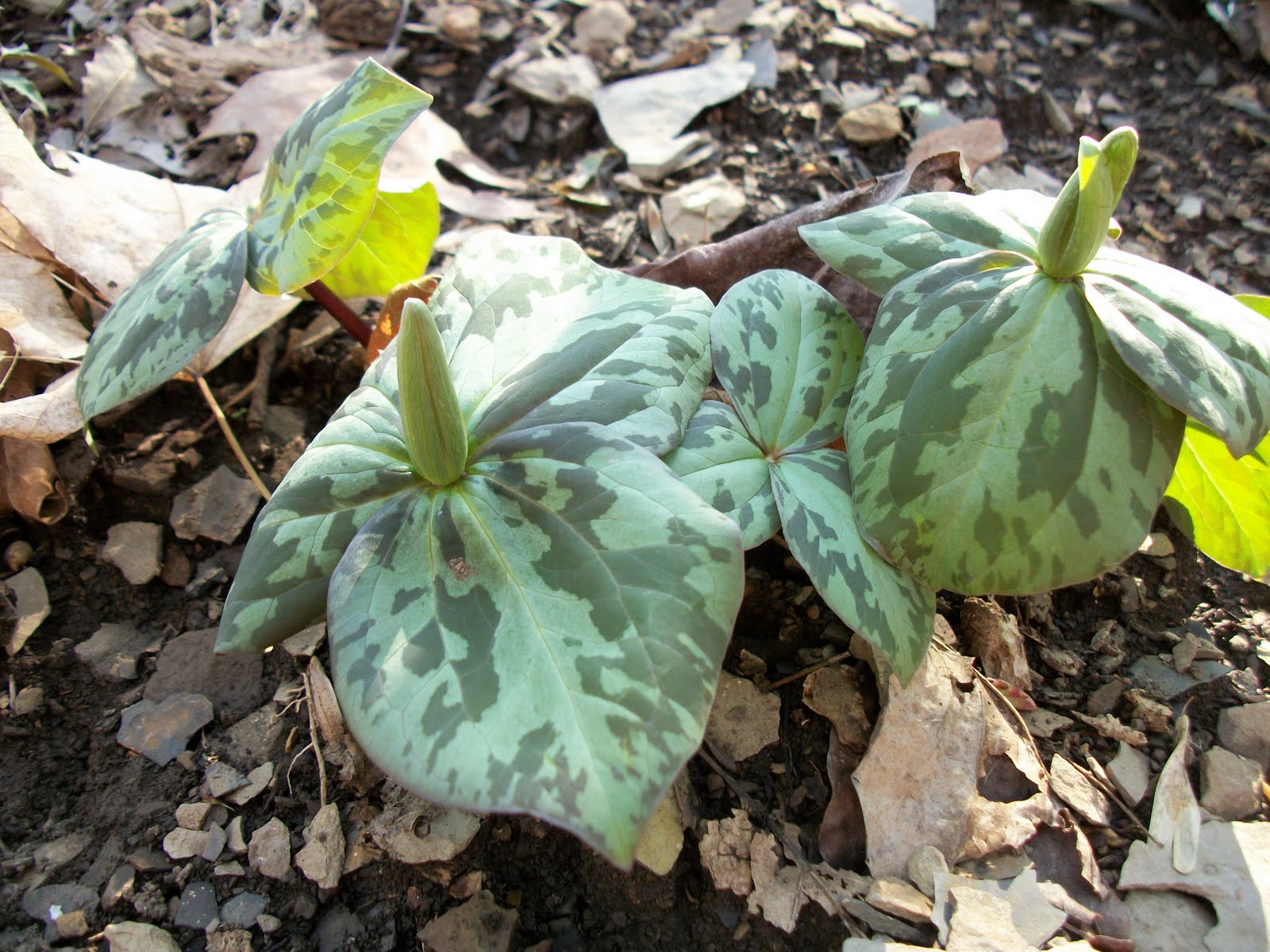
and Trillium at Warner Parks.


Witch Hazel at a private garden in Woodbine.


Friday, March 11, 2011

Sawflies and Knockout roses

Be on the lookout.........
It will very soon be time to watch your roses for rose slugs, ( or 'bristly rose slugs'.) By the time you notice the stripped leaves...its too late.

Rose slugs, or Rose Sawflies are the immature stage of a Sawfly wasp. That's right, wasp babies.

Start looking for them on your roses in in late March and early April and prepare to control them into May or June. They are small thin crawler-munchers that resemble a caterpillar, about 1/2 inch long. Find them on the back of the leaf.

But you have Knockout roses.

Yes, Knockout Roses will get sawflies.

"Knockout" roses are not trouble free. It's a myth. I repeat, it's a myth that they are trouble free. Common talk says they are a disease free, trouble free rose. In fact, what they are is a fantastic re-blooming rose that is somewhat resistant to mildews and fungi, which are a common problem for many shrub roses, especially hybrid tea roses. The introductions get better each year...if you want to get new roses every year, that's great!
They do not need pruning; yet they can tolerate a heavy handed pruning session in early spring and mid summer.

However, they are not insect -resistant. Hungry caterpillar-like insects find their early spring leaves very satisfying.

For the last two Springs I've seen the sawfly larva work through dozens of Knockout rose bushes. Your leaves will be munched munched munched. The good thing is the Knockout rose will probably bounce back. It might even be a good idea to prune off the worst stems, since these roses will re-bloom on new wood.


Back to the sawfly. They are numerous in genus/species and they don't look much like the scary wasps that sting you in an old country shed. In fact, the adult sawfly is stingless and serve as pollinators.

(Nice pictures here - http://bugguide.net/node/view/112 )
(Another helpful article overall - http://www.finegardening.com/pages/g00171.asp)

Protecting your rose: I am reading that Bt is not effective, but a Neem oil or horticultural oil will work. ....READ the package directions. READ the directions. Apply as soon as you see the critters, and again every 10 days to two weeks until about Memorial Day or until they disappear.
Oh yeah, and READ and follow the package directions.

Thursday, March 10, 2011

Go, See, Learn, Teach

Here's a start on the many upcoming Spring and Summer events for plant lovers. There are innumerable learning events and opportunities to 'network'.
Even better, there's a great many opportunities to teach or volunteer. There's a need somewhere for your skills, time, knowledge.

Most of the organizations sponsoring the following events also welcome your membership or volunteer time.
Also, to the best of my knowledge, all of these events are free, no charge, nada, the money stays in your pocket.

Nashville Rose Society annual Pruning Party in Hendersonville March 26, 10:00 a.m.
http://www.nashvillerosesociety.com/

Wildflower Hike at Beaman Park in Nashville Wednesday, March 30
9 – 11 A.M. (Call ahead to register, please)
http://www.beamanpark.org/


Perennial Plant Society of Middle Tennessee Annual Plant Sale April 9 from 9-2
http://www.ppsmt.com/2011_Plant_Sale/
Don't miss it. And if you actually want plants, get in line early!


"Trails and Trilliums" continues! but in a new location, the amazing Monteagle Sunday School Assembly grounds. April 16 & 17 in Monteagle TN. Now part of the Friends of South Cumberland Recreation Area events table....the two days includes: native plants for sale, garden items sale, farmers market, vendors & booths, several hikes, a watercolor workshop, a geology hike, etc. (A few of the events do charge admissions fees; see the website, please.)
http://www.friendsofscsra.org/trailsandtrilliums.org/


Community Food Summit May 7, 2011


Davidson County Master Gardeners will have several educational events this summer. The Master Gardeners exist to help the reach of the University of Tennessee's Extension service by providing horticultural knowledge and assistance to the community. You can become a Master Gardener by taking the 40 hour educational course offered in the winter and completing 40 hours of volunteer service your first year. Many beautiful food and flower gardens are maintained throughout Nashville by the efforts of the Master Gardeners.
http://www.dcmg.org/home.cfm

Monday, March 7, 2011

Unfolding


Red Buckeye preparing to bloom


Mondo grass berries...only revealed with the late winter trimming.