
Monday, February 21, 2011


Tuesday, February 8, 2011
Winter of 2011


I have lived in Nashville for over 20 years and I can't recall such a consistently snowy winter. I recall a lot of January months with sheets of ice on the road, but not these weekly blankets of dusty white stuff.
I rather like it! The garden is lovely in snow, no matter what it looked like before! It's pretty tough to do work in, between the snows though. Too mushy, never mind the cold.
The hellebores are just now pushing up new flowers. Last February 5th, I had almost open blooms; today...just a hint.

I noticed a LOT of robins this past week.....I also noticed the plague of hackberry seeds all over my driveway, my car, getting tracked into the house. Wonder if the robins are here for the hackberry seeds.
We know what comes next.


This winter's gardening accomplishments...


Wednesday, December 8, 2010
More Winter Color
 The bright red berries and leaves of many trees and shrubs are one of the highlights of cold weather. Hollies, Nandinas (pictured here, Nandina domestica), even the invasive Japanese Bush Honeysuckle produce many berries.
The burning bushes are fading, but here's a flowering dogwood (Cornus florida) looking brilliant.

Wednesday, November 17, 2010
Some Fall Color
I went hiking and climbing last week, at a bluff overlooking the Cumberland River, in Clarksville Tennessee. Here are a few photos of some wildflowers.
I like how these find niches in the rock where a little soil has collected and grow right on the rock face. There are tons of Columbine as well, but they are not in flower right now.
I like how these find niches in the rock where a little soil has collected and grow right on the rock face. There are tons of Columbine as well, but they are not in flower right now.


Foamflower (Tiarella), Autumn leaves, Aster
Thursday, October 14, 2010
Good Plant, Bad Plant
If you could read one article that thoughtfully covers the topics of invasives, monocultures, ticks, and poop counting .....why would you seek further entertainment? So read on... and find another reason to dislike Lonicera mackii (invasive Japanese bush honeysuckle):
http://www.sciencedaily.com/releases/2010/10/101011173245.htm
A shorter and more academic version is at:
http://esameetings.allenpress.com/2008/P13016.HTM (Ecological Society of America meeting abstract)
The gist is that it seems Japanese bush honeysuckle creates a dense monoculture, providing a chateau of choice for deer. The deciduous leaves emerge earlier and cling later than any other native (or exotic) understory plant, allowing the deer to nest/rest more during the times of year that tick larva emerge.
For those who don't already have Japanese bush honeysuckle on their NIMBY list, there's basically a big discussion among horticultural nerds (I say that in front of the mirror) about native plants, and invasive exotics, and who should be allowed over the fence.
The flash card version is that there is a debate about which plants should go in our yards. On one end of the continuum you would only choose plants native to your area.....native since when? How about before people started importing plants from other countries, which probably started before the Mayflower, the Vikings, and all the other immigrants...hmmm...when there was no country called the USA.....OK back to the sentence, that we should plant only natives when possible, for biodiversity and ecological balance. A lot of plants imported for landscape use and for agricultural purposes have no natural controls and tend to take over a landscape driving out a lot of other plants. Think Kudzu, think Burmese Pythons in the Everglades. There is real harm done and the 'downstream' effect can harm wildlife as well, because shelter and food options change. Heck, invasive insects might even affect the trout fishing industry if you can believe that, but I don't have that reference to cite at hand.
But if we only planted natives we would have a lot less color and shape and choice in our gardens. No roses for example. No tall bearded iris.
Another end of the continuum in this discussion have us saying "Bring it on, we are the masters of our little acre." Euonymous fortuneii Winter Creeper is such a useful plant, year round evergreen ground cover, it really serves an important purpose in the home landscape. Great weed suppression. Maintenance free. Sounds good to me.
So narrowing down the difficulty...let's try to avoid invasive exotics, plants which are so fast to multiply, have zero local controls, and are rapidly displacing important medicinal, habitat, agricultural, and wildflower features. But be thoughtful about what other plants we put in the ground. Hollies? Laurels? Butterfly Bush? Lavender? Many of the varieties are not native per se. But they stay where they are put, a lot of the time. So use them, just find out a little more before you plant. Just because it's for sale doesn't mean it doesn't have some 'side effects'.
My personal list, plants that are not my friends: Winter Creeper (Euonymous fortuneii) , Japanese Honeysuckle (Lonicera mackii) , Chinese yam (Disocorea opposotifolia). A lot more on invasive exotics at:
http://www.tneppc.org/pages/initiatives
So much for flash cards, sometimes stuff takes a little explaining
Sunday, September 26, 2010
September Wildflowers
Goldenrod (Solidago, various species) and Ironweed (Veronia)


An unidentified tall flower, white blooms.

JoePye Weed (Eupatorium purpureum)
 and Ragweed (ironically its genus is Ambrosia).
Most of these were seen at Radnor Lake State Natural Area in Nashville.


An unidentified tall flower, white blooms.

JoePye Weed (Eupatorium purpureum)
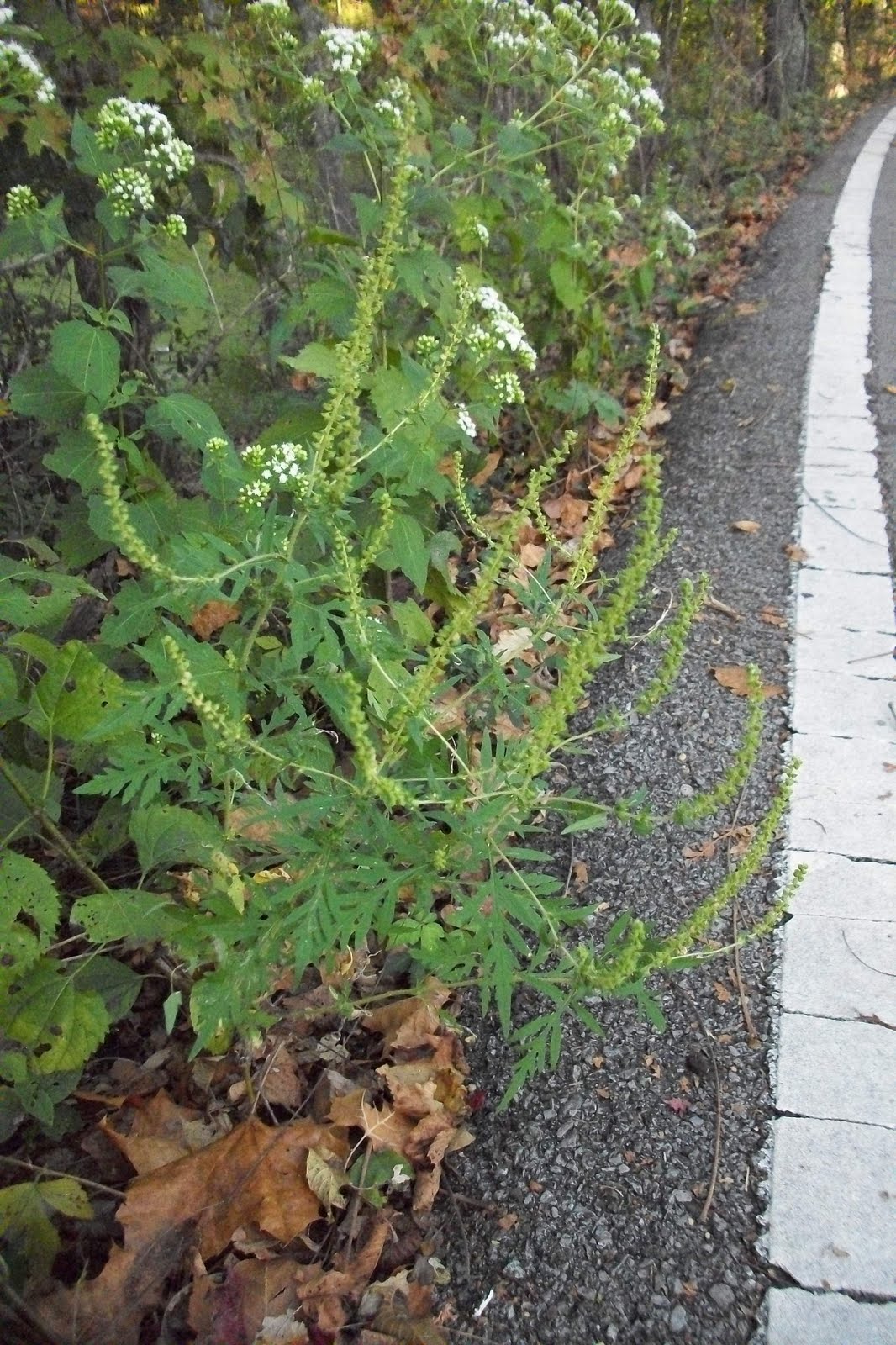 and Ragweed (ironically its genus is Ambrosia).
Most of these were seen at Radnor Lake State Natural Area in Nashville.
Tuesday, September 21, 2010
Community Supported Agriculture and a Farm Dinner
Community Supported Agriculture
CSAs are local farmers providing food to local communities, typically on a subscription basis. The benefits to the supporters are fresh food delivered weekly; the farmers benefit by being able to practice smaller scale and sustainable growing practices, the environment benefits because your food is shipped a very short distance. Local products are generally shipped under one hundred miles from farm to market. 'Conventional' food products (typically found in grocery stores) travel over 1000 miles from source to market, and that is only including domestic products.*
Fresh food likely keeps more of its nutritional value than products transported for a week or more. Less gasoline and other resources are used and local people benefit from the jobs generated.
http://nashfof.wordpress.com/csa/ has a list of Nashville area food providers.
Fresh Harvest LLC a cooperative of organic family farms in the Nashville area is hosting their first Farm Dinner. A fully prepared dinner, made from locally produced products, follows a tour of Turnbull Creek (organic) farm.
Saturday September 25, at5:30
Visit http://freshharvest.locallygrown.net/weblog for details
*http://www.leopold.iastate.edu/pubs/staff/files/local_foods_HEN0604.pdf
Subscribe to:
Posts (Atom)